Tensor发布全球首个L4原生自动驾驶汽车 Tensor Unveils World's First Native Level 4 Autonomous Vehicle
(文末中文)
Tensor Unveils Robocar at CES 2026: A Look at the Company Behind the World's First L4 Autonomous Vehicle for Personal Ownership
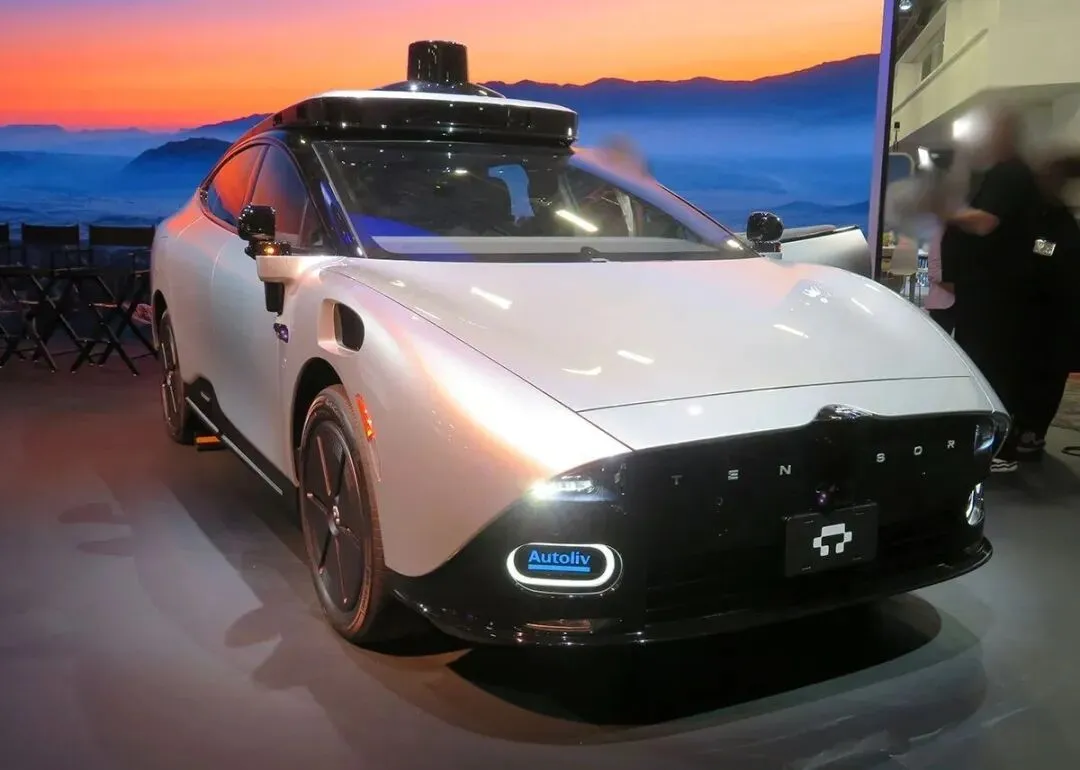
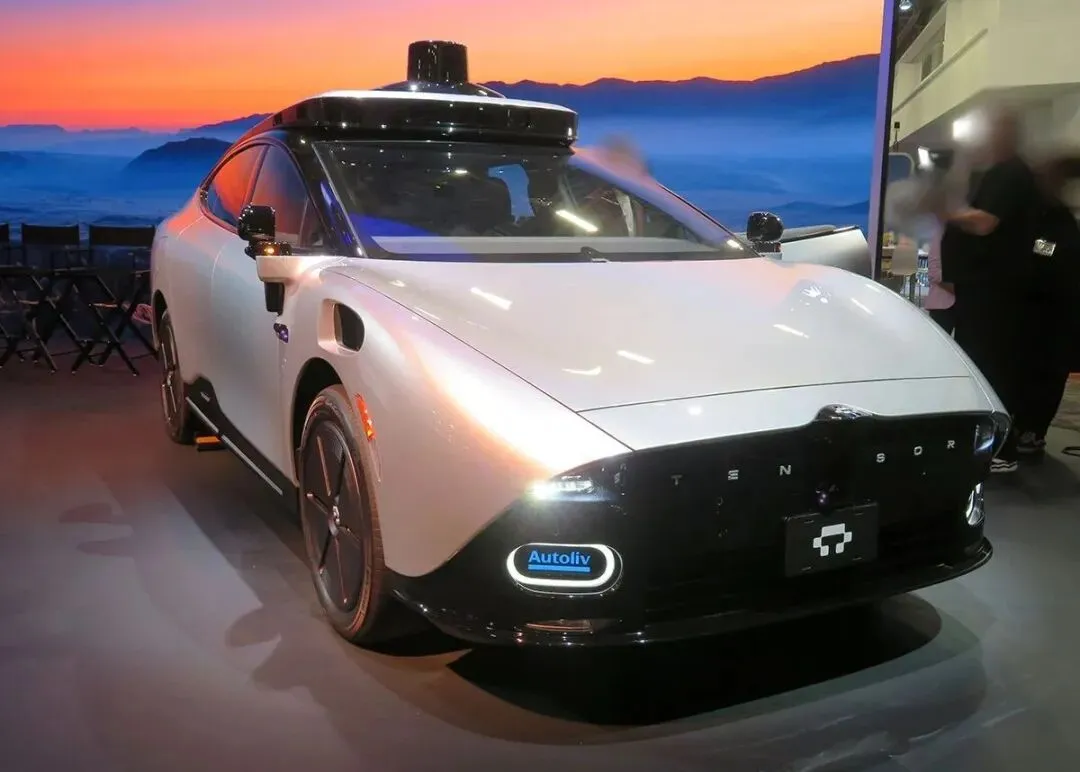
Tensor unveiled its Robocar at CES 2026, claiming it to be the world's first Level 4 autonomous vehicle designed for personal ownership. Let's take a closer look at the company behind this innovation.
Company Overview and Strategic Positioning
Tensor is headquartered in San Jose, California. Founded in 2016, its predecessor was the autonomous driving technology company AutoX. The company positions itself as an "agentic AI company," dedicated to building agentic products for individual consumers. Its core vision is "own your autonomy," empowering individuals to own and control their own AI.
A key strategic decision was Tensor's complete divestment of all businesses and brands associated with its predecessor, AutoX, in China, allowing it to focus on the markets of the United States, the European Union, and the Gulf Cooperation Council. This move is widely seen as an effort to mitigate geopolitical risks and concentrate on Western markets, enabling it to operate as an independent California-based startup.
Core Product: The Tensor Robocar
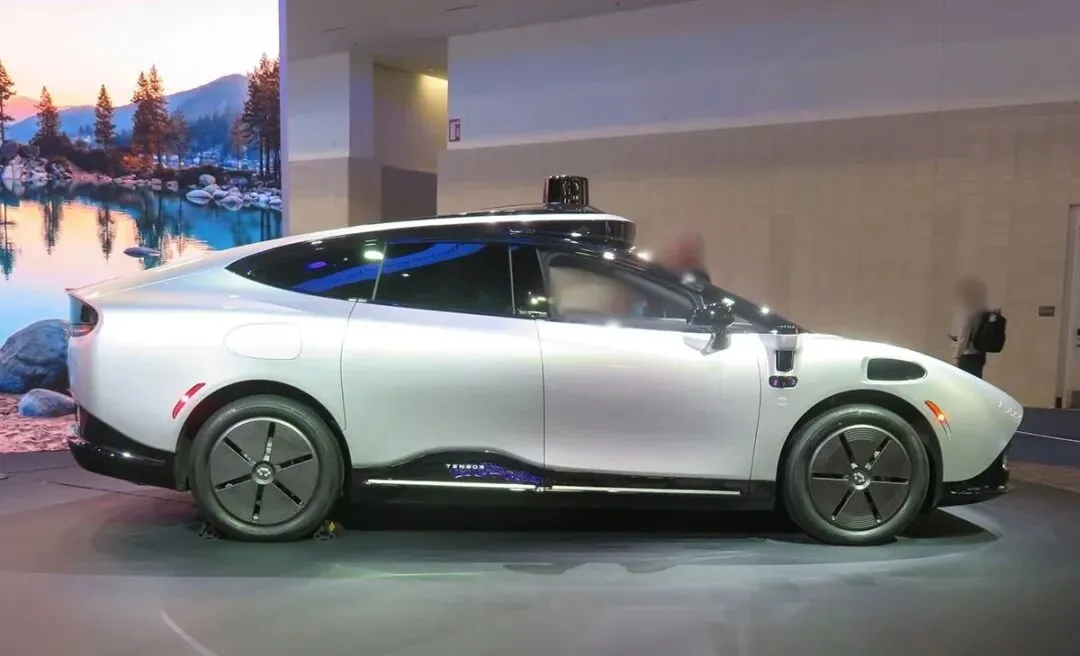
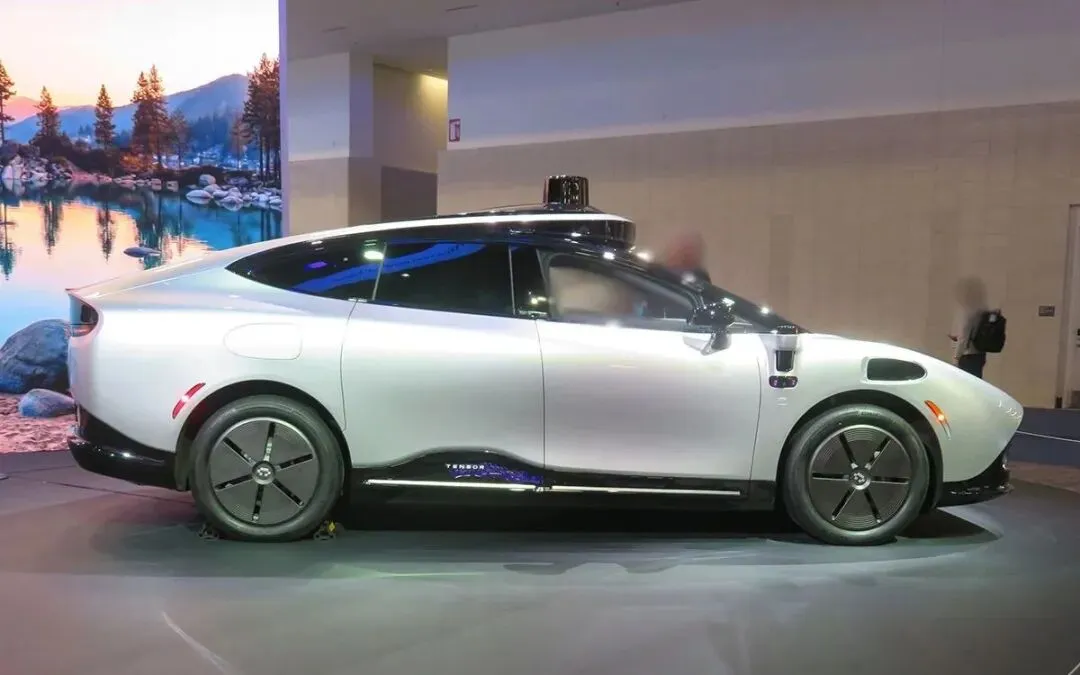
The Tensor Robocar is the company's flagship product, with the following core characteristics:
Truly Personal Ownership: Unlike most L4 autonomous vehicles designed for Robotaxi fleets, the Tensor Robocar is positioned as the "first mass-produced, consumer-facing autonomous vehicle designed for large-scale personal ownership." This positioning aims to cater to the vast global market of new cars purchased for individual use.
AI-Defined Vehicle: The vehicle is designed "from the ground up" for L4 autonomous driving, from its chassis to its architecture, rather than being a retrofit of a traditional model. This allows for optimal sensor placement and deep integration of computing systems.
Innovative "Dual-Mode" Design: A hallmark feature is the world's first foldable steering wheel, developed in collaboration with Autoliv. In autonomous mode, the steering wheel and pedals can retract, providing passengers with more space. When needed, they can be deployed for manual driving. The vehicle's airbag system also intelligently adapts based on the driving mode.
Technological Prowess: Computing Power, Sensors, and AI Architecture
Tensor's technological advantages are evident in the deep integration of its software and hardware:
Onboard Supercomputer: The vehicle is equipped with a supercomputer powered by eight NVIDIA Drive AGX Thor system-on-chips, delivering over 8,000 TOPS of processing power, leading it to be described as a "data center on wheels." For redundancy and safety, it also incorporates multiple processors from TI, NXP, and Renesas.
Hyper-Redundant Sensor Suite: Featuring over 100 sensors, including 37 cameras, 5 lidars, 11 radars, 22 microphones, as well as collision and water level detectors, the system processes over 53GB of sensor data per second. This high level of redundancy is fundamental to achieving L4 safety.
Dual-System AI Architecture: Its AI is entirely data-driven, distinguishing it from traditional rule-based systems. It employs a dual-system approach mimicking human cognition:
System 1: Provides quick, intuitive driving reactions through imitation learning from expert driving behavior.
System 2: Utilizes a visual language model for complex reasoning to handle rare and extreme "edge cases."
Data Privacy First: All personal data is processed and stored within the vehicle, not uploaded to the cloud, ensuring user privacy.
Open Source Strategy: OpenTau: At CES 2026, Tensor open-sourced its AI training toolchain, OpenTau, aimed at accelerating the development of vision-language-action foundation models. This move helps build trust within the developer community, attract global talent, and establish its technological leadership in the field of physical AI.
Business Model and Market Strategy
Tensor adopts a hybrid business model:
Direct-to-Consumer Sales: The core goal is to sell the Robocar directly to consumers, making it a personal asset. Deliveries are planned to begin in the second half of 2026, with initial markets including the United States, the European Union, and the Middle East.
Strategic Partnership with Lyft: This represents a disruptive innovation. Tensor has partnered with Lyft to enable personally owned Robocars to become "Lyft-ready" vehicles. When owners are not using their vehicle, they can deploy it with a single click into Lyft's ride-hailing network to earn money automatically. Lyft itself has also pre-ordered hundreds of Robocars for its fleet operations. This changes the economic model of car ownership, transforming the vehicle from a "liability" into an "income-generating asset."
Capital Plans: According to media reports, Tensor is considering a funding round of $300-$400 million and may pursue an IPO in the U.S. by the end of 2026 or early 2027.
Challenges and Risks Faced
Despite its promising prospects, Tensor faces significant challenges:
Cost and Pricing: The extensive sensor array and immense computing power inevitably lead to high costs. The final retail price remains a critical unknown and could potentially exceed the affordability of average consumers.
Technological Maturity and Regulation: The commercial deployment of L4 autonomous driving is highly dependent on technological maturity and approval from regulatory bodies in various regions. Its "Lyft-ready" service, planned for launch in 2027, still needs to clear regulatory hurdles.
Market Competition: Traditional automakers like Tesla and autonomous driving leaders like Waymo are also pursuing similar goals, making the market competition exceptionally fierce.
Manufacturing and Delivery: As a startup, establishing a reliable supply chain and achieving mass production capability, while delivering on the promise of second-half 2026 deliveries, presents a monumental test.
Conclusion
Tensor is a highly ambitious company attempting to redefine the automobile – not just transforming it from a mode of transport into a "wheeled robot," but evolving it from a consumer good into a "productive tool" that can generate income for its owner. Its technological specifications are industry-leading, its business model is innovative, and it is adapting to geopolitical and industry dynamics by divesting its China operations and open-sourcing its AI platform. If it can successfully overcome the challenges related to cost, regulation, and mass production, Tensor has the potential to become a pioneer in the era of personal autonomous driving.
Tensor在2026年CES上发布了Robocar,据称是全球首款为私人拥有而设计的L4级自动驾驶汽车,我们来看看他是什么来头。
公司概况与战略定位
Tensor公司总部位于美国加州圣何塞,成立于2016年,其前身是自动驾驶技术公司AutoX 。公司将自己定位为"代理型AI公司",致力于为个人消费者构建代理型产品,其核心愿景是"拥有你的自主权",即让个人拥有和控制自己的AI 。
一个关键的战略决策是,Tensor已完全剥离了其前身AutoX在中国的所有业务和品牌,专注于美国、欧盟和海湾阿拉伯国家合作委员会市场 。此举被认为是规避地缘政治风险,专注于西方市场的举措,使其能够以一家独立的美国加州初创公司身份运营 。
核心产品:Tensor Robocar
Tensor Robocar是公司的旗舰产品,其核心特点是:
真正的私人所有:与大多数为Robotaxi车队设计的L4级自动驾驶汽车不同,Tensor Robocar是"首款为大规模私人拥有而设计、可量产、面向消费者的自动驾驶汽车" 。这一定位旨在满足全球绝大多数为个人使用而购买的新车市场 。
AI定义车辆:车辆从底盘到架构都是为L4级自动驾驶而"从零开始"设计的,而非在传统车型上改造 。这使其能够实现传感器的最佳布局和计算系统的深度集成。
创新的"双模式"设计:与奥托立夫合作开发的全球首款可折叠方向盘是其标志性设计。在自动驾驶模式下,方向盘和踏板可以收起,为乘客提供更多空间;在需要时,也可以展开进行人工驾驶 。车辆的安全气囊系统也能智能地根据驾驶模式进行调整 。
技术实力:算力、传感器与AI架构
Tensor的技术优势体现在其软硬件的深度集成上:
车载超级计算机:车辆搭载了由8个NVIDIA Drive AGX Thor系统级芯片组成的超级计算机,提供超过8,000 TOPS的算力,被形容为"轮子上的数据中心" 。此外,还配备了TI、NXP、Renesas的多款处理器作为冗余,确保安全 。
超冗余传感器套件:拥有超过100个传感器,包括37个摄像头、5个激光雷达、11个雷达、22个麦克风以及碰撞、水位检测等,每秒可处理超过53G的传感器数据 。这种高冗余度是实现L4级安全性的基础。
双系统AI架构:其AI完全由数据驱动,区别于传统的基于规则的系统 。它采用模仿人类认知的双系统:
数据隐私优先:所有个人数据均在车内处理和存储,而非上传至云端,以此保障用户隐私 。
开源战略:OpenTau:在CES 2026上,Tensor开源了其AI训练工具链OpenTau,旨在加速视觉-语言-动作基础模型的开发 。此举有助于建立开发者社区信任,吸引全球人才,并确立其在物理AI领域的技术领导地位。
商业模式与市场策略
Tensor采取了一种混合的商业模式:
面向个人销售:核心目标是直接向消费者销售Robocar,使其成为个人资产 。计划于2026年下半年开始交付,首批市场包括美国、欧盟和中东 。
与Lyft的战略合作:这是一个颠覆性的创新。Tensor与Lyft合作,使个人拥有的Robocar可以成为"Lyft-ready"车辆 。当车主不使用车辆时,可以将其一键投入到Lyft的网约车网络中自动赚钱,Lyft自身也已预订了数百辆Robocar用于其车队运营 。这改变了汽车所有权的经济模型,让车辆从"负债"变为"创收资产"。
资本规划:据媒体报道,Tensor正在考虑进行3-4亿美元的融资,并可能在2026年底或2027年初在美国进行IPO 。
面临的挑战与风险
尽管前景诱人,Tensor仍面临重大挑战:
成本与定价:如此庞大的传感器组合和超高的算力,其成本必然高昂,最终零售价将是一个关键未知数,可能远超普通消费者的承受范围 。
技术成熟度与法规:L4级自动驾驶的商业化落地高度依赖技术成熟度和各地监管部门的批准。其"Lyft-ready"服务计划在2027年推出,仍需跨越法规门槛 。
市场竞争:特斯拉等传统车企以及Waymo等自动驾驶领先者同样在追求类似目标,市场竞争将异常激烈 。
制造与交付:作为一家初创公司,能否建立起可靠的供应链和大规模量产能力,并兑现2026年下半年交付的承诺,是巨大的考验。
总结
Tensor是一家极具野心的公司,它正试图重新定义汽车——不仅是从交通工具转变为"轮式机器人",更是从消费品转变为可为所有者创造收入的"生产工具"。其技术指标行业领先,商业模式创新,并且通过剥离中国业务和开源AI平台来适应地缘政治和行业发展。如果能够成功克服成本、法规和量产方面的挑战,Tensor有望成为个人自动驾驶时代的开拓者。