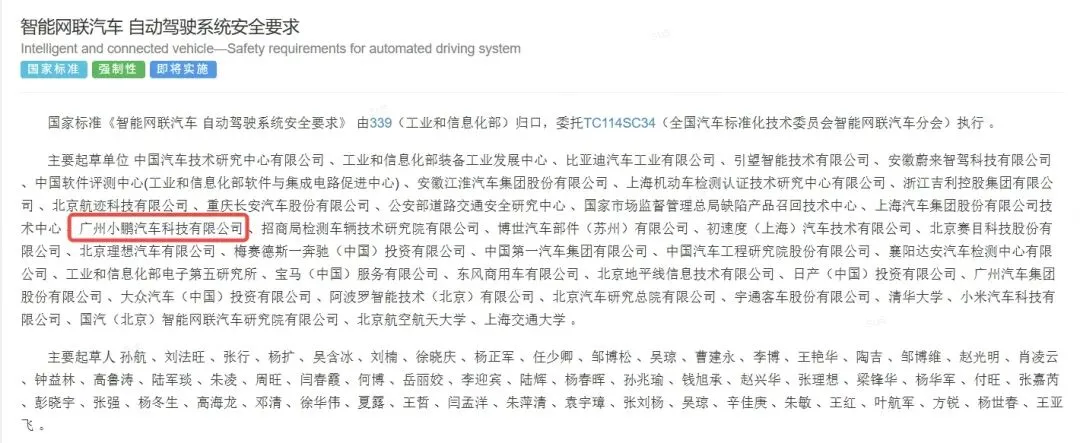
China has announced its first mandatory national safety standard for Level 3 and Level 4 autonomous vehicles, tightening safety requirements for selfdriving cars in the world's largest automotive market.
中国出台首部适用于3级、4级自动驾驶车辆的强制性国家安全标准,在全球规模最大的汽车市场收紧自动驾驶汽车的安全规定。
The safety requirements for automated driving systems of intelligent connected vehicles, which will take effect on July 1, 2027, have been approved by the State Administration for Market Regulation and the National Standardization Administration. The rules were introduced on the website of the Ministry of Industry and Information Technology on Tuesday.
这份《智能网联汽车 自动驾驶系统安全要求》已于国家市场监督管理总局、国家标准化管理委员会获批,将于2027年7月1日正式施行;该规定于周二在工业和信息化部官网对外发布。
Unlike previous driver assistance technologies, the L3 automated driving system enables vehicles to take over certain driving tasks under specific conditions, while still requiring human intervention. The L4 system can perform driving tasks without human input in designated environments.
和以往的驾驶员辅助技术不同,3级自动驾驶系统可在特定工况下接管部分驾驶操作,但依旧需要人类随时介入;4级自动驾驶系统能够在划定运行区域内,无需人为操控便可完成全部驾驶任务。
According to the new requirements, automated driving systems must achieve an equivalent safety level to that of a qualified and attentive human driver performing the same dynamic driving tasks while avoiding unnecessary risks to passengers and other road users.
新规提出,自动驾驶系统执行动态驾驶任务时,安全水准须等同于一名资质合格、注意力集中的驾驶人,同时需要规避给车内乘员以及其他道路参与者带来多余风险。
The standard introduces clearer requirements for humanmachine interaction, which has become an increasingly important issue as drivers shift between automated and manual control.
该标准针对人机交互制定了更为明晰的规范;当驾驶员在自动驾驶、人工操控之间来回切换时,人机交互现已成为愈发关键的难题。
For L3 vehicles, manufacturers must equip their systems with driver takeover monitoring to ensure that motorists are able to resume control when requested. Vehicles must also provide clear information regarding when automated driving is ready, activated or disengaged. If a human driver fails to respond to a takeover request, the vehicle must automatically execute a minimumrisk maneuver, which is a predefined sequence designed to bring the vehicle to the safest possible state.
针对3级自动驾驶车辆,车企必须搭载驾驶员接管监测系统,保证驾驶人收到接管提示之后可以顺利拿回车辆控制权。车辆还需要清晰提示自动驾驶待命、开启以及退出的状态。倘若驾驶员没有响应接管提醒,车辆需要自动执行最低风险处置操作;该预设操作流程可以令车辆进入风险最低的运行状态。
Rao Qing, chief architect for global solutions at the autonomous driving company Momenta, said, "The release of the mandatory national standard marks the beginning of a new phase for China's autonomous driving industry, where largescale commercialization is built on safety and clear regulatory benchmarks."
自动驾驶企业毫末智行全球方案总架构师饶晴表示:“这项强制性国标落地,标志着国内自动驾驶行业迈入全新阶段,行业规模化商业化,今后将建立在安全保障与清晰的监管准则之上。”
Since the beginning of the year, regulators have introduced standards relating to simulation testing, vehicle communications and Level 2 driverassistance systems, as well as mandatory safety requirements for higher levels of automation, resulting in one of the most comprehensive regulatory frameworks for selfdriving vehicles in the country.
今年开年至今,监管部门陆续出台仿真测试、车载通信、2级驾驶辅助系统相关标准,同时推出高阶自动驾驶强制安全规范,搭建起国内一套完备度靠前的自动驾驶汽车监管体系。
Last year, China granted conditional approval to its first L3 autonomous passenger vehicles and positioned intelligent driving as a key area of development.
去年我国有条件准许首批3级自动驾驶乘用车投产上路,并将智能驾驶划定为重点发展赛道。
The latest data from the Ministry of Industry and Information Technology shows that in the first half of this year, 70.5 percent of new passenger vehicles sold in China were equipped with L2 combined driver assistance systems, which means that roughly seven out of every 10 new vehicles were equipped with such technology.
工信部最新数据显示:今年上半年,国内售出的全新乘用车当中,70.5%搭载有2级组合驾驶辅助系统,相当于每十台新车大约有七台配备该技术。
However, some industry experts said that fewer than 10 percent of L2equipped vehicle owners have actually activated or used the driver assistance functions.
但多名业内专家称,搭载2级辅助驾驶的车主里,实际开启、使用该辅助功能的人数占比不足一成。
Jiang Han, a senior researcher at the think tank Pangoal, said: "The new mandatory national standard marks a fundamental shift in China's regulation for autonomous driving — from giving emerging technologies room to develop, to imposing hard requirements to ensure safety. It will also promote the healthy development of China's autonomous driving market, as it continues to develop at a rapid speed."
盘古智库高级研究员江瀚谈到:“全新强制性国标代表我国自动驾驶监管思路发生根本性转变:从给新兴技术留出发展空间,转向硬性规定保障行车安全。在国内自动驾驶市场高速扩张的背景之下,该标准同样能够助推行业良性发展。”